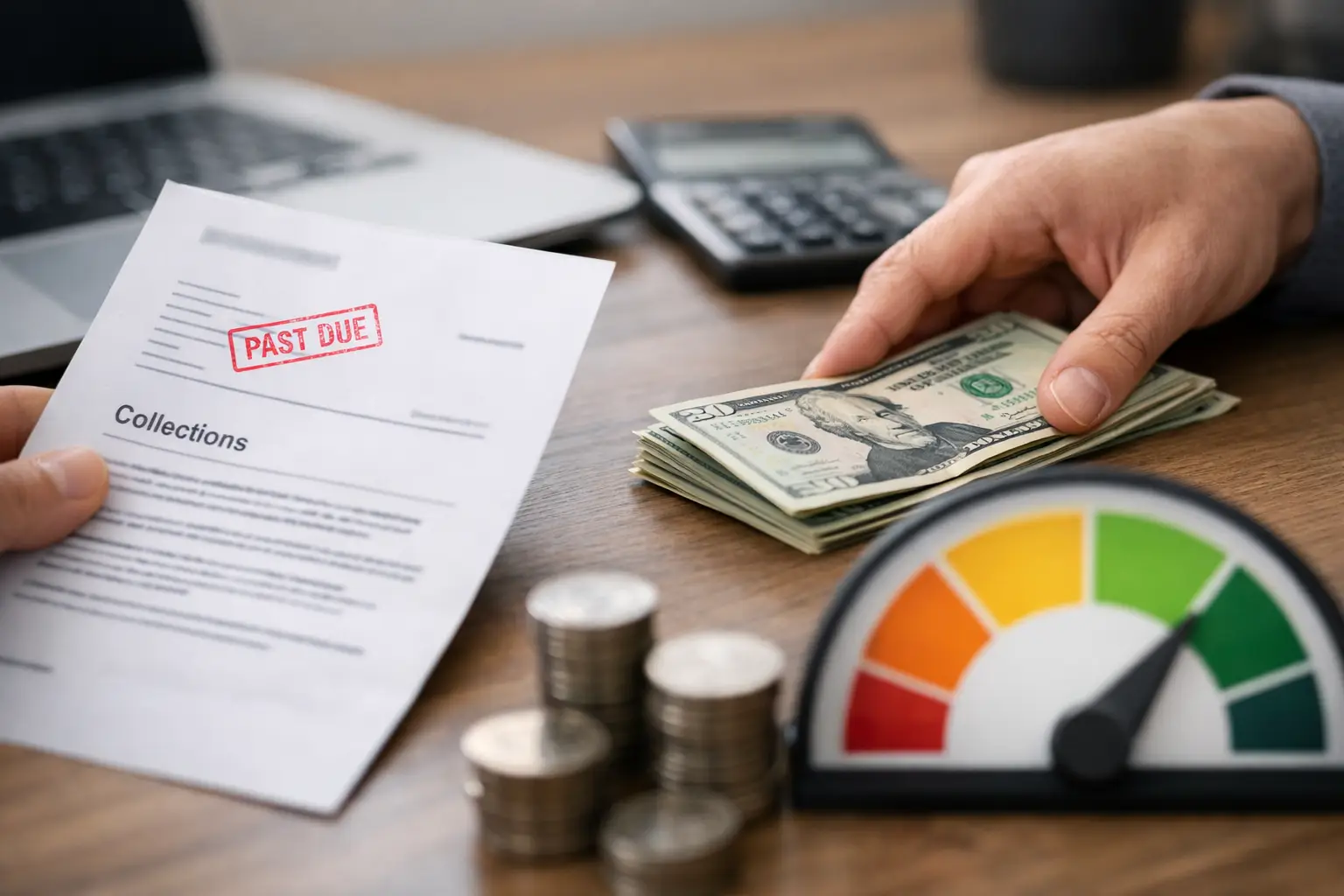
A collection account can feel like a dead end. You finally have the money to deal with it, but one question keeps coming up: can paying collections help score, or are you just clearing a debt without seeing much change on your credit report?
The honest answer is that it depends on the scoring model, the type of debt, and what else is showing on your credit file. Paying collections can absolutely help in some situations, but it is not always the instant score boost people expect. What it does do is put you in a stronger position to rebuild, reduce risk, and move forward with a clear plan.
Can paying collections help score in real life?
Yes, paying collections can help your credit score in real life, but not in every case and not on every scoring model.
Some newer credit scoring models ignore certain paid collection accounts. In those cases, paying the collection may improve your score because the account no longer hurts you the same way once it shows a zero balance or paid status. Medical collections have also been treated differently in recent years, which can change the impact.
But older scoring models, including some still used by mortgage lenders, may continue to count a collection account against you even after it is paid. That means you could pay the debt and see little or no immediate score jump. This is frustrating, but it does not mean paying was pointless.
A paid collection is often better than an unpaid one when a lender reviews your full credit history. Even when the score itself does not move much, the update can improve how your report looks to underwriters, landlords, and creditors making lending decisions.
Why paying collections does not always raise your score fast
Credit scores are built on more than one negative item. If you have collections, there is a good chance you may also have late payments, high credit card balances, charge-offs, or limited positive history. In that situation, paying one collection account may help only a little because the rest of the file is still weighing you down.
There is also the issue of timing. A collection hurts most when it is recent. As it ages, its impact may lessen somewhat, although it can still stay on your report for up to seven years from the original delinquency date. If the account is old, paying it may be financially smart and still not create a dramatic score increase.
Another factor is whether the collection is being updated correctly. If an account changes to paid but still reports inaccurate dates, balances, or status details, it can continue causing damage. That is why simply paying a collection is not the same as making sure your credit report is accurate afterward.
When paying collections can make the biggest difference
The strongest score benefit often happens when the collection is recent, the rest of your credit file is fairly healthy, and the scoring model being used gives less weight to paid collections.
It can also matter when you are preparing for a major goal like buying a car, qualifying for an apartment, or applying for a mortgage. Some lenders want to see collections resolved before approval, even if the score impact is limited. In that case, paying the debt may improve your chances of getting through underwriting.
Medical collections are another area where paying can matter differently. Changes in reporting practices have reduced the impact of some medical debt, and smaller medical collections may not appear the same way they once did. Still, you should verify exactly what is being reported before assuming an account no longer matters.
Paid in full vs settled for less
If you cannot afford to pay the full amount, settling a collection for less than the balance can still be a practical move. From a budgeting perspective, resolving the debt for less may free up money you need for current bills and on-time payments, which are essential for rebuilding credit.
From a credit reporting standpoint, both paid in full and settled accounts can still show as resolved. Some lenders may prefer paid in full, but many mainly want to see that the debt is no longer outstanding. The bigger issue is making sure the account is updated correctly after payment.
Before sending money, get the terms in writing. Confirm the amount, the due date, and how the account will be reported. If a collector agrees to update the account as paid or settled, keep records of that agreement. Clear documentation protects you if the reporting later turns out to be wrong.
Should you ask for a pay-for-delete?
A pay-for-delete is when you offer payment in exchange for the collection account being removed from your credit report. Some collection agencies agree to this, while others do not.
If a collector is willing to delete the account after payment, that can be better than simply marking it paid because a deleted collection no longer appears as a negative item. That said, not all agencies follow this practice, and you should never assume deletion will happen unless it is confirmed in writing.
Even when pay-for-delete is not available, you still have options. You can pay or settle the debt, then review the account for reporting errors. If information is inaccurate, incomplete, duplicated, or reported beyond the legal timeframe, that may create grounds for a dispute.
What to do before paying a collection
Before paying anything, make sure the debt is valid. Ask who owns the account, the original creditor, the balance, and the date of first delinquency. If the details are unclear, request validation. This step matters because people sometimes pay debts they do not owe, debts that are past the reporting period, or balances inflated by improper fees.
You should also pull your credit reports and compare what each bureau is showing. Collection accounts do not always appear the same way across all three reports. One may be inaccurate while another is not reporting it at all.
If you are close to applying for a mortgage or auto loan, it can help to speak with a credit professional first. Paying the wrong account at the wrong time may not be your best move if there are larger issues affecting your score, like high revolving balances or reporting errors on other accounts.
The smartest way to improve your score after paying collections
Paying a collection is often just one step. The real progress usually comes from what you do next.
Start by making every current payment on time. Payment history has a major impact on your score, and fresh positive history matters. Next, work on lowering credit card balances if you have them. High utilization can drag down your score even when collections are being resolved.
Then review your full credit report for inaccuracies. This is where many people miss opportunities. A collection may not be the only problem. You could have duplicate accounts, outdated late payments, incorrect balances, or accounts that should no longer be reporting. Fixing those issues can create more meaningful score improvement than paying one collection alone.
If your file is thin, adding positive credit responsibly can help. That might mean using a secured credit card carefully or becoming an authorized user on a well-managed account. The goal is to build new, clean history that begins to outweigh older damage over time.
So, can paying collections help score enough to matter?
Yes, it can matter, but not always in the same way people expect. Sometimes paying collections helps the score directly. Sometimes it helps more with lender approval than with the number itself. Sometimes the best result comes from combining payment with dispute work, balance reduction, and a broader rebuilding strategy.
That is why there is no one-size-fits-all answer. If the debt is valid, paying or settling it can be a smart step toward financial stability. If the account is inaccurate, outdated, or unfairly reported, the better move may be to challenge it before paying. And if you are trying to qualify for something important soon, your timing and approach matter a lot.
Credit problems rarely come from one item alone, and credit recovery rarely comes from one action alone. The people who see the strongest results usually take a full-picture approach: resolve what is legitimate, correct what is inaccurate, and build better habits that give your score room to grow. If you feel stuck, start there. Progress on credit is rarely instant, but it is very often possible.