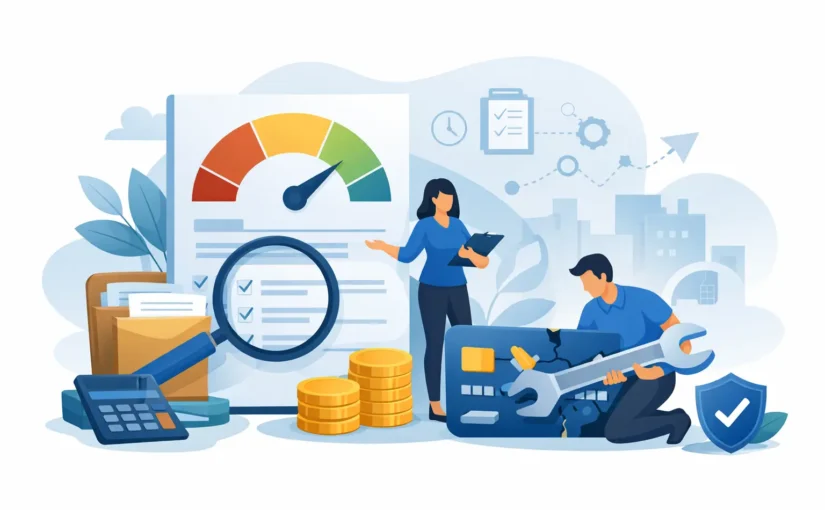
A low credit score usually becomes urgent at the worst possible moment – right before a car loan, apartment application, or mortgage preapproval. If you’re searching for how to improve credit score fast, the good news is that some actions can help sooner than people think. The catch is that fast does not mean instant, and the right move depends on what is hurting your score in the first place.
If your score dropped because of high balances, one strategy can work quickly. If the problem is inaccurate collections or reporting errors, the fastest path may be fixing what should not be there at all. And if the damage comes from missed payments, the timeline is different. Real progress starts with knowing which issue matters most.
How to improve credit score fast starts with your credit reports
Before you pay anything or close any accounts, look at your full credit picture. Your score is based on the information in your credit reports, so you need to see what lenders are seeing. That means reviewing all three major bureaus and checking for late payments, collections, charge-offs, high balances, hard inquiries, and any accounts that do not belong to you.
This step matters because the best solution is not always the most obvious one. Many people rush to pay off an old collection, only to learn later that the account was being reported inaccurately. Others assume they have a payment problem when the real issue is credit card utilization. A score can move for very different reasons, so guessing can waste time and money.
If you find inaccurate information, dispute it with documentation. Reporting errors can include wrong balances, duplicate accounts, outdated negative items, or accounts mixed in from someone else’s file. Correcting errors will not always happen overnight, but when a harmful item is removed, the impact can be meaningful.
Lower your credit card utilization as fast as possible
For many people, this is the quickest legitimate way to improve a credit score. Credit utilization is the percentage of your available revolving credit that you are using. If your cards are close to maxed out, your score can suffer even if you have never missed a payment.
A simple example shows why this matters. If you have a $1,000 limit and a $900 balance, you are using 90% of that limit. That signals risk. If you pay that balance down to $250, your utilization drops to 25%, which generally looks much better to scoring models.
There are two levels to watch. Your total utilization across all cards matters, and your utilization on each individual card matters too. Someone with low overall utilization can still get hurt by one card sitting at 95% of its limit.
If you need speed, focus on revolving balances before installment loans. Paying down a credit card often helps faster than paying extra on a car loan or personal loan because utilization has a more immediate scoring effect. You may also be able to make a payment before the statement closing date, which can reduce the balance that gets reported to the bureaus.
Bring past-due accounts current if you can
Payment history is the biggest scoring factor, so if you are behind on active accounts, catching up should be a top priority. One recent late payment can do serious damage, especially if your credit was previously strong. The sooner you stop the bleeding, the better.
There is an important distinction here. Bringing an account current can prevent additional late marks, which helps stabilize your file. It does not erase the earlier late payment automatically. Still, avoiding a second or third late mark on the same account is often one of the smartest moves you can make.
If you cannot pay everything, call the creditor and ask about hardship options, payment arrangements, or due date adjustments. Some lenders are more willing to work with you than people expect. A short conversation can sometimes prevent a fresh delinquency from being reported.
Ask for a credit limit increase carefully
A higher limit can improve your utilization ratio without requiring a huge payoff, but this move comes with a trade-off. Some lenders review your account with a soft inquiry, while others may use a hard inquiry. A soft inquiry usually does not affect your score. A hard inquiry can.
That is why this strategy works best when you have a good payment history on the card and know the issuer’s process. If the increase is done without a hard pull, it can help quickly by lowering your utilization percentage. If a hard inquiry is required, the benefit may still outweigh the downside, but it depends on your situation and how soon you plan to apply for new credit.
Do not close old credit cards in a rush
People often assume that closing accounts makes them look more responsible. In reality, closing a credit card can hurt your score if it reduces your available credit and raises your utilization. That is the opposite of what you want when trying to improve your credit score fast.
There are exceptions. If a card has a high annual fee you truly cannot justify, or if keeping it open creates a spending risk, closing it may still make sense. But from a scoring standpoint, an open account with a low balance is often more helpful than a closed account.
Dispute inaccurate negative items the right way
Not every negative item can be removed, but inaccurate negative items should be challenged. This includes accounts reported with the wrong date, wrong balance, wrong status, or no proper verification. It also includes collections that should have aged off or accounts that were never yours.
A strong dispute is specific and supported by records. Vague disputes tend to go nowhere. If you are dealing with multiple errors or a complicated history, guidance can help you avoid missing details that matter. This is one reason consumers work with a service-oriented company such as Credit At Last – not because there is a magic shortcut, but because the process is easier when someone experienced helps you organize the facts and respond strategically.
Become an authorized user if the fit is right
This can help, but it is not automatic. If a family member or trusted person adds you to a well-managed credit card account with a long history, low utilization, and on-time payments, that account may strengthen your profile. It can be especially useful for someone with thin credit.
But this only works if the primary account is healthy. If the card carries a high balance or has late payments, being added could do more harm than good. Trust matters here, and so does timing.
Avoid moves that can slow you down
When people feel pressure, they often make changes that sound responsible but backfire. Opening several new accounts at once can create hard inquiries and reduce the average age of accounts. Paying off a collection without understanding how it is being reported may not produce the score jump you expected. Settling debt can be the right financial decision in some cases, but the scoring result depends on the account type, its status, and what is reported afterward.
Be especially careful with quick-fix promises. No legitimate company can remove accurate negative information just because you want it gone. Fast improvement is possible, but it comes from targeted action, not shortcuts.
What to focus on if you need results quickly
If you are trying to qualify for financing in the near future, start with the factors most likely to move your score in the shortest window. Lowering credit card balances, correcting errors, and preventing new late payments usually deserve the most attention. If you have old derogatory items, those may still matter, but they often take more time to address.
It also helps to think in tiers. First, stop new damage. Next, reduce utilization. Then challenge inaccurate reporting. After that, work on rebuilding with on-time payments and stable account management. That approach is not flashy, but it is effective.
How to improve credit score fast before a major application
If you plan to apply for a mortgage, car loan, or apartment soon, do not make random changes two weeks before the lender pulls your credit. Keep balances low, avoid new applications, stay current on every bill, and review your reports early enough to catch mistakes. Small shifts can matter when you are close to a lender’s approval threshold.
For some borrowers, a 20 to 40 point increase can change the terms of an offer. For others, the goal is not just a better rate. It is getting approved at all. That is why a focused plan matters more than trying every credit tip you find online.
Credit repair is rarely about one dramatic fix. More often, it is about solving the right problem first and building momentum from there. If your score is standing between you and a home, a car, or peace of mind, start with the facts, make the highest-impact changes first, and give your progress room to show up.